In Hawaii, there is a group of people who want to change the idea of tourism from within, incorporating traditional concepts of land stewardship and sustainability into the educational system for both citizens and visitors to the islands. With this effort they hope to keep the local culture alive and raise a new generation of sustainable tourists who, by espousing this ethos, will repay them by spreading change not only locally but also beyond the islands.

The Hawaiian Islands are both old and new, where traditional practices are applied in innovative ways © JTSorrell / Getty Images
Sustainable cuisine based on local ingredients
Chef Brian Hirata jumps out of his van and walks over volcanic rocks until he finds a handful of ohelo berries, small bright pink, garnet red and gold orbs that glow in the early morning light. "They are born in this very thin strip of land," he says of the area of the island where the berries are found. "You only have to drive 10 minutes away to find nothing. The microclimatic conditions are very variable." He picks a few ripe berries but before moving on, he leaves some of the fruit on the plant so the next animal or human looking for food can find some anyway.
Hirata works as a Culinary Arts Master at the island's Community College and is the creator of the Na'au pop-up restaurant in Hilo, a dining experience designed to take diners on a journey of discovery of Hawaiian food, culture and history. His dishes are based on locally sourced and sought-after ingredients and are a modern interpretation of the dishes that have nourished the island's people for centuries.
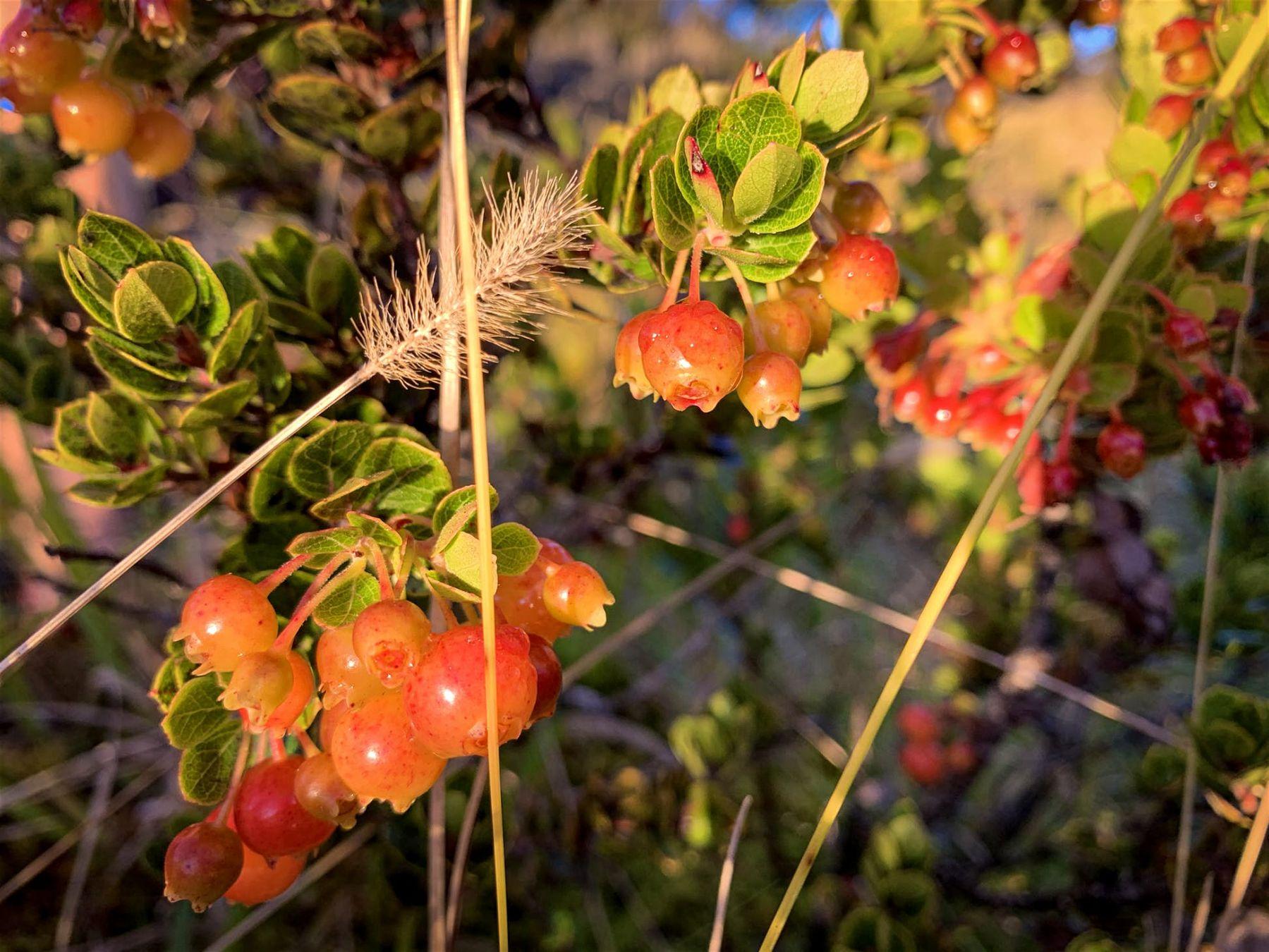
The ohelo plant produces edible berries © Bailey Freeman / Lonely Planet
Today, the chef is searching for ingredients on an unnamed hillside at the base of Mauna Kea, the dormant volcano that is also the highest peak on the Hawaiian Islands. Born and raised in Hawaii in an outdoor-loving family, Hirata moves through space with some skill.
The island is home to four of the world's five major climate zones and 10 of the 14 subzones; it is one of the most climatically diverse regions on Earth. This variety of climates has favoured the emergence of many endemic animal and plant species, and the chef uses both to prepare his delicacies.
Ohelo berries, sorrel and tender mallow leaves collected during the hike will be part of the feast of delicate dishes served at dinner tonight. Developed by the graduate students and Hirata himself, the menu offers carefully prepared morsels that evoke the flavours of Hawaii, from the rainforest to the history of the Waipio Valley to the nostalgic flavours of one's favourite dishes, such as grandma's tempura.
Besides promoting the preservation of local culture, Hirata knows that his role is also important for the responsible management of the island's ecosystems. "My main goal is to educate the younger generation," said Hirata. "If we lose the connection to the food that we have in Hawaii.... If a whole generation doesn't understand the importance of protecting the ocean because 'I don't go there, I don't use it, I don't know anything about fishing', [then the environment] will lose its value."

At Na'au Hilo they use traditional and local ingredients to create cutting-edge dishes © Bailey Freeman / Lonely Planet
The Na'au team hopes to settle on a permanent location soon to continue inviting people to discover environmentally friendly Hawaiian food. "I want to harness affluent travellers to spread this idea," says Hirata. "I want guests who come from all over the world to come to the restaurant and then return home, wherever that may be, to say 'Hawaii has a lot of interesting ingredients, I didn't know about them at all' and share their experience. I want Hawaii to be part of the gastronomic map."
Rediscovering the sacred Waipio Valley
We walk among the towering eucalyptus trees that surround the Waipio Valley. Although they make the landscape even more spectacular, these trees are invaders, sentinels with leaves in an occupied land. After the sugar plantation was closed down in 1994, a Japanese paper company moved to the island and planted thousands of acres of eucalyptus trees in this area; these trees are usually cut down after five years but the company backed out before their time and 20 years later the eucalyptus trees are still here, choking the native Hawaiian forest.
The paper mill was just the latest in a long line of companies exploiting the Waipio region, an area of great historical heritage celebrated by the Hawaiian people. Also called the 'Valley of the Kings', the Waipio Valley has been home to many aliʻi (chiefs) and is at the centre of Hawaiian mythology. "I own over 500 pages of songs and stories about this region," says Kūlia Kauhi Tolentino-Potter, founder of the local non-profit organisation Pōhāhā I Ka Lani.
Subscribe to our newsletter! For you weekly travel tips, special offers, stories from the world and 30% discount on your first order.

The Waipio Valley, rich in history and culture, is not easily accessible © Bailey Freeman / Lonely Planet
The former schoolteacher and her partner Jesse hope to boost tourism in the area; much of the valley is privately owned but visitors often trespass, not only breaking the law but also injuring themselves along the rough roads and unofficial trails. Tolentino-Potter believes, however, that things can change.
It all started as extra lessons for his students and has now become a coordinated action aimed at restoring and protecting the Waipio Valley. Visitors can help remove invasive flora, plant native species and receive in-depth lessons on Hawaiian language and culture in return. "How can we motivate people to be interested in learning about the culture or to visit further to realise how deep our sense of respect goes?" asks Tolentino-Potter. "Instead of just observing the sights, they need to contribute and feel a connection to these places."
The organisation was founded in 2001 and operated as an act of love until gaining non-profit status in 2009. The effects of their land management are evident. The organisation removed an entire landfill, planting vetiver (a plant that helps prevent erosion and reclaims the soil) and other plants, including cabbage, in its place. Every week they restore five plots of land. Their work embodies the spirit of the Hawaiian mālamaʻāina motto, that is, the love of the land, but also the associated responsibilities, such as caring for the land practically and culturally.

Although centuries ago it was populated by thousands of Hawaiians, today most of the Waipio Valley is wilderness © Alvis Upitis / Getty Images
We stand at the edge of the valley and as we admire the view of the weathered slopes, a mist begins to form on the top of the opposite wall of the valley. Tolentino-Potter tells us that her family calls it Kaʻohukolomailunaokalāʻau, fog that dances in the treetops; she also tells us that in Hawaiian there are over 300 names for the types of fog, rain and wind that shape the island. When we ask her the source of her encyclopaedic knowledge she chuckles. "Sometimes we are amazed at you and how much you learn about American culture. I think it's your culture, you grew up in this kind of environment. For us 'home' is nature. The place where we live. Like it's our Beyoncé!"
What we can learn about the environment from local lakes and legends
The sea breeze makes the lake's crystal-clear water ripple, shoals of silver fish swim beneath its surface while the light makes their scales shimmer like a metallic glow. Bubbles burst at the edges from the underground springs nearby, small waves crash against the walls from the ocean channel. This is Haleolono, a four-hundred-year-old reservoir used for breeding fish, an activity traditionally practised on the island; this site could change the way we see scientific data.
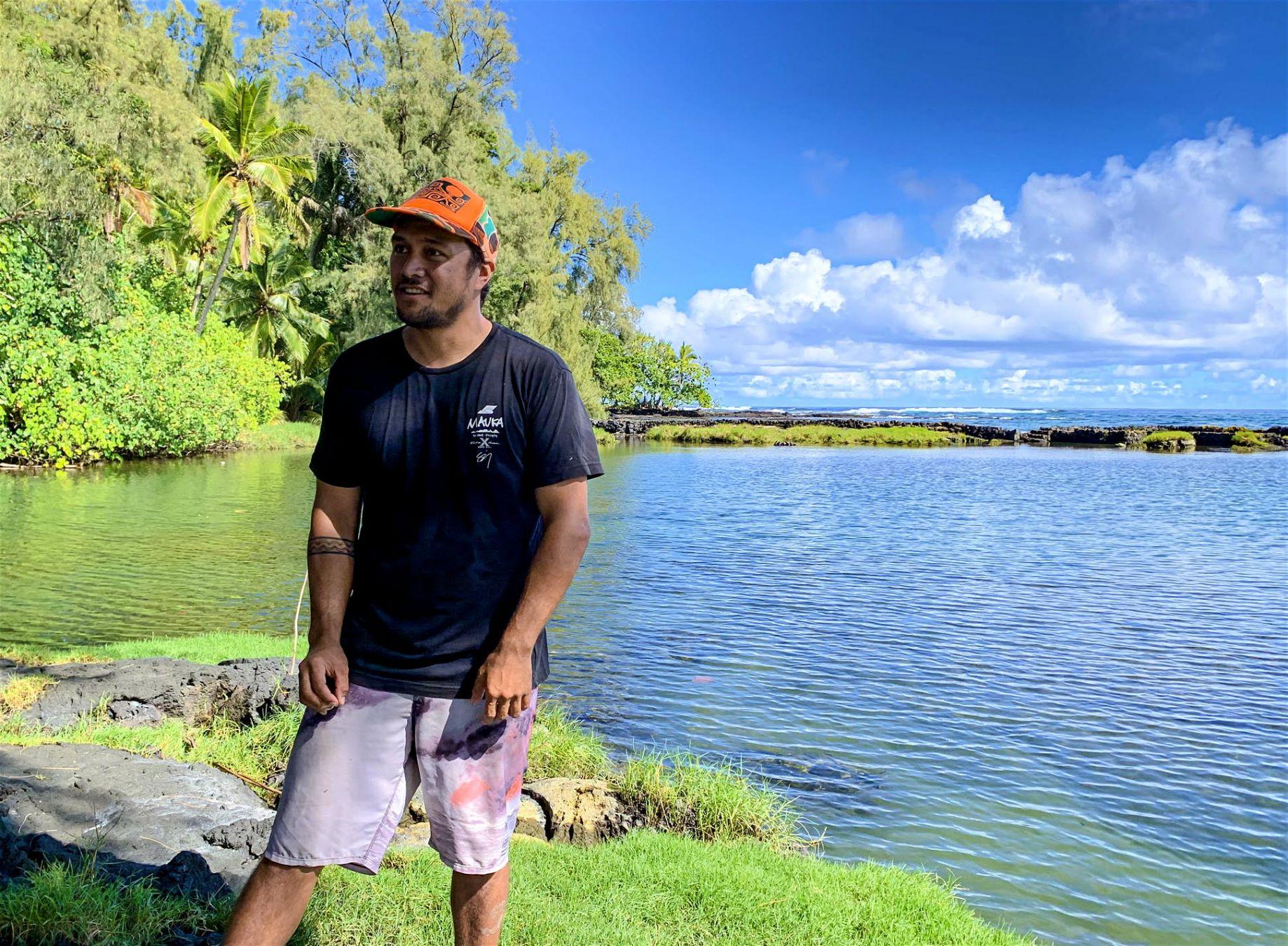
Luka Kanakaʻole explains traditional fish-farming practices to visitors © Bailey Freeman / Lonely Planet
Fish-farming lakes have been used for centuries by the community to feed the population when ocean fishing is unsuccessful. Today, Luka Kanakaʻole is dedicated to protecting the oceans and this place; he is an expert on fish farming and local culture and wants to raise awareness of the ancient connection between Hawaiian culture and science. Hale O Lono is part of the Edith Kanakaʻole Foundation, a non-profit started by Kanakaʻole's grandmother that supports and encourages the spread of Hawaiian culture. The foundation sponsors a number of culturally significant sites, such as the fish farm lake, and organises many dives, workshops and a popular hālau (hula class).
At the lake, Kanakaʻole closely monitors the species of fish arriving from the sea, their health and feeding habits, as well as the effects of changes in temperature and sea level. Like the Tolentino-Potter property, the lake was once a rubbish dump, but in 1996 work began to reclaim the land. Since using concrete would have 'suffocated' the reservoir, the rock walls require constant maintenance; locals and visitors can contribute every first Saturday of the month by helping to clean up the lake and rebuild the walls, and then receive a lesson on local history and culture.
"We use this space to encourage different ways of analysing and observing changes in the natural environment, and turn this into quantifiable data translated into our language," he says. "The songs and olis [Hawaiian chants] passed down from our ancestors are a different example of scientific data." He tells us that the story of Pele's escape across the Hawaiian islands is actually an explanation of the tectonic movements of the plates in the Pacific hotspots. Another tale about a warrior wearing a hat with a yellow feather and travelling from island to island explains the migration of the palila bird.

Fish farming lakes have been used for centuries in Hawaii to have a guaranteed source of fish © Bailey Freeman / Lonely Planet
Kanakaʻole believes that changing the way we talk about science can increase interest and make knowledge more accessible and engaging. "These stories are about the evolution of our ecology. We can take this data and turn it into a compelling narrative to the ears of Hawaiian society."
The Hawaiian Islands continue to be an epicentre of environmental change, evidenced by recent events such as the 2018 eruption in the Puna district and the fungus that is attacking the sacred ʻōhiʻa trees, radically altering the landscape as well. Thanks to Kanakaʻole and his collaborators, new olis will become part of the local cultural heritage, inspiring a new generation of citizens of Hawaii and the world, an environmentally friendly generation.
Related articles

Hawaii cruise: when to go, prices and itinerary

The power of volcanoes in Hawaii

Why Hawaii is the best place in the world to see rainbows

Hawaii: a paradise to discover

Low-cost Hawaii: how to save in paradise

The most beautiful places in Hawaii
Best time to travel Hawaii - all about climate and weather