 Oahu, part of the Hawaiian archipelago, is the island where the capital Honolulu is located as well as famous and important places such as Pearl Harbor and Waikiki Beach. This atoll is also the most densely populated and every year attracts tourists from all over the world, who can find volcanic wilderness, beautiful beaches but also state-of-the-art facilities and excellent accommodation. Oahu has also been the set of famous TV series such as Lost and Hawaii Five-0 and films such as Hunger Games: The Girl on Fire.
Planning a trip to this paradise? Here is a guide on how to organise everything for the best.
Travel information: useful info
Inhabitants 1,000,000
Capital: Honolulu
Languages: Anglo-American and Spanish
Local currency: American dollar ($) / exchange rate: €1.00 = $1.19
Climate: tropical with a hot season from June to October with temperatures of 20/28° and a cooler one from December to March with temperatures between 18/26°. The north-eastern part is the wettest, with annual rainfall of 3 200 mm
Time zone: GMT-10 (-11h compared to Italy)
Vaccinations: no vaccination required
Entry requirements: valid passport; ESTA authorisation ($14.00/€11.80) or Visa
Distance from Italy: 12,896 km (25 hours flight time including stopovers)
Security info: visit the USA section on the Farnesina website
Where it is located
Third largest of the Hawaiian Islands and second largest from the north, Oahu is located in the North Pacific Ocean and covers 1,600 square kilometres. Inland there are volcanoes, mountains and valleys, while the coast is famous for its coral reefs and fish.
How to get there
From Milan or Rome: Oahu has the Daniel K. Inouye International Airport in Honolulu. There are no direct flights from Italy. From Rome and Milan, at least one stopover is necessary, usually in Los Angeles (minimum duration 22 h 30 min). Compare flights from Rome or Milan
From major European capitals: there are no direct connections, you always need to make at least one stopover in San Francisco, Dallas or Los Angeles.
When to go? Info on climate and best time
Month | Average temperatures (min/max) | Precipitation (days/mm) |
|---|---|---|
January | 19 / 27° | 8 days / 60 mm |
February | 19 / 27° | 7 days / 50 mm |
March | 20 / 27° | 9 days / 50 mm |
April | 21 / 28° | 8 days / 15 mm |
May | 22 / 29° | 6 days / 15 mm |
June | 23 / 31° | 6 days / 8 mm |
July | 24 / 31° | 7 days / 13 mm |
August | 24 / 32° | 6 days / 15 mm |
September | 24 / 31° | 7 days / 20 mm |
October | 23 / 30° | 8 days / 45 mm |
November | 22 / 29° | 9 days / 60 mm |
December | 20 / 27° | 10 days / 80 mm |
Climate: tropical with a hot season from June to October, with temperatures of 20/28°, and a cooler season from December to March, with temperatures of 18/26°. It rains all year round and about 3,200 mm of rain falls. The sea temperature in February and March is around 24°, in the other months 26°/27°.
Best period: in general, it can be enjoyed all year round.
Periodto avoid: the hurricane period runs from June to November, with a peak between August and early October, however the risk is minimal.
Tips: pack light clothes for the day, a sweatshirt for the evening, possibly a light jacket and K-way. Snorkelling equipment, swimwear and sunscreen. For mountain areas, around 1,000 metres mid-season clothing, a jumper or jacket for the evening, around 2,000 metres warm jacket and cap for the evening. For the higher peaks (Mauna Kea and Mauna Loa) very warm clothing, down jacket, gloves, scarf, cap, sunglasses, sunscreen, hiking shoes
10 things to see: beaches and places of interest
Theisland of Oahu is made up of 4 regions: the Windward Coast, i.e. the east coast where there are beaches and green areas, here it is possible to go dolphin spotting and snorkelling in Waianae; the North Shore, the northern coast paradise for surfers and ideal for various water experiences, such asdiving with sharks; the Leeward Coast, i.e. the west coast characterised by beaches, country landscapes and golf courses; and finally Central Oahu, the central area where there are valleys, sugar cane fields and pineapple plantations.
All regions have numerous activities and attractions to offer those who visit them, let's see in detail what are the 10 things to see in Oahu:
Honolulu: capital of the siola, with an area full of historic buildings, the city harbour, Chinatown, the famous Bishop Museum, which offers visitors an interesting insight into the history and evolution of Hawaii
Pearl Harbor: lagoon harbour famous for the Japanese attack during World War II. It houses an interesting memorial to the victims of this tragedy. Recommended tour with pick-up to learn about the history of this place
Waikiki: one of the most famous beaches on the island and in Hawaii, 3.2 km long and crescent-shaped, surrounded by skyscrapers, clubs, offices overlooking the Pacific Ocean. You can explore it all on the Waikiki Trolley sightseeing bus.
Diamond Head: a 230-metre-high volcanic crater to be reached by a two- to three-hour trek. Once at the top you'll enjoy breathtaking views of Waikiki and Diamond Head Lighthouse. Recommended to take part in amorning excursion with a guide
Kalanianaole Highway: a scenic highway that circumnavigates the southern part of the island. On the way, stop at Halona Blowhole, a spot where if you are lucky you can see humpback whales, and Hanauma Bay Nature Preserve, a bay with strong currents but where colourful fish swim among the corals.
Hoomaluhai Botanical Garden: a huge garden in the central part of the island, surrounded by mountains and with plants and animals. A short distance away is the Nu'uanu Pali Lookout, from where one can admire a splendid view and from where several trails lead into the forest
Haiku Stairs: 3,922 steps that climb vertically up the mountain in the east of the island. Since most of the time they are shrouded in clouds and due to their steepness, they are nicknamed Stairway to Heaven. NB: Climbing is illegal and fines range between $600 and $1000, but there are many tourists who risk their penalties every year to enjoy the wonderful view.
Mount Tantalus: a point from which to admire a splendid landscape, especially at sunset, when the hues of pink and orange in the sky contrast with the city of Honolulu which begins to light up.
Manoa Falls: interesting 46-metre-high waterfalls reached by crossing a magnificent 2.6 km (round trip) path through the rainforest, amidst bamboo, ancient trees and where it is not uncommon to encounter chameleons.
Kane'ohe district: the Valley of Temples, here you will find the Japanese Buddhist temple Byodo-inn, a magical place where you can breathe tranquillity built in 1968 to celebrate the centenary of the landing on the island of the first Japanese immigrants
What to do in Oahu: excursions and tours
How much does a holiday on Oahu cost? Prices, offers and tips
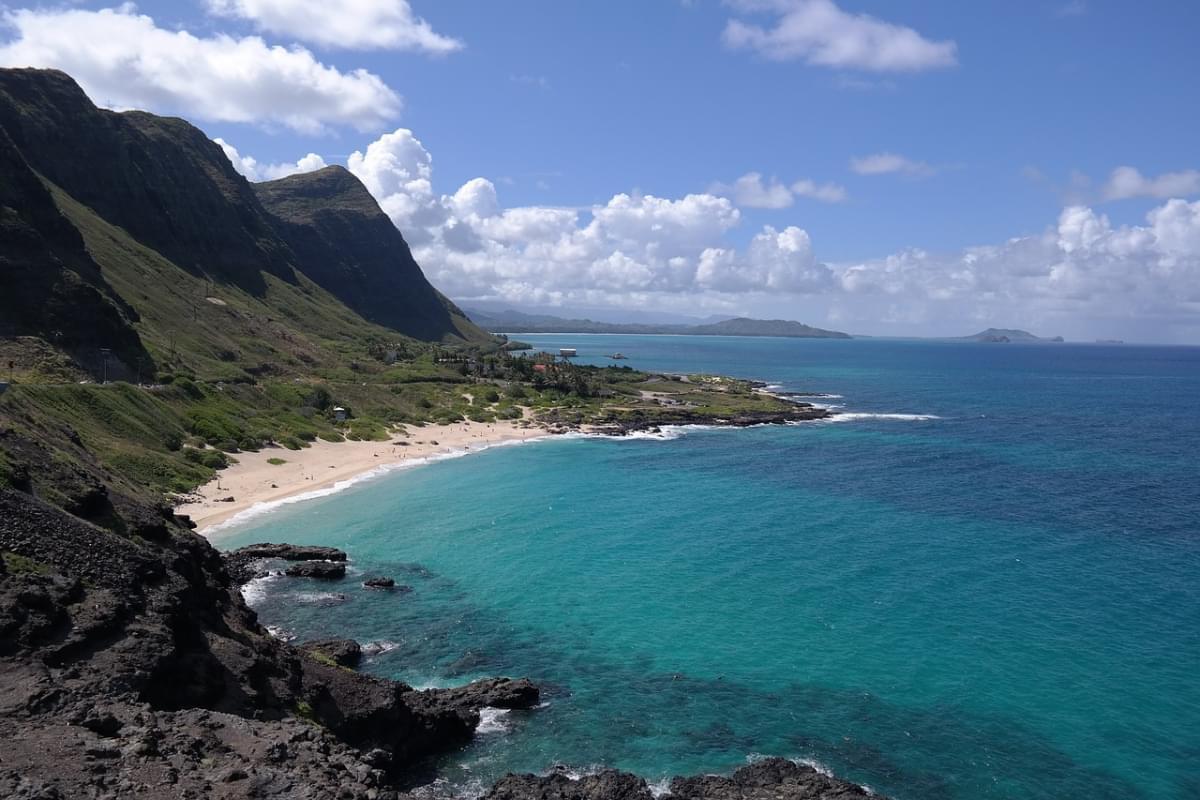 Oahu and the other Hawaiian Islands are a popular destination even though they are remote and rather expensive. Both flight and accommodation prices vary according to the season, and the months of December to February and mid-June to late August are among the most expensive.
As far as flights are concerned, prices start at a minimum of €800.00 and can go as high as €1,700.00. There is no shortage of accommodation on Oahu: hotels, hostels, B&Bs and the famous Condo, or American-style residences characterised by houses with a few floors and a communal central swimming pool. Each flat is equipped with a kitchen, bathroom and rooms. Average accommodation costs range from €55.00 per person to €120.00 depending on the season and accommodation.
To get around the island then we suggest hiring a car, which costs about $50.00 per day (€42.00). Alternatively, you can use The Bus company's buses, which serve several areas. As for food costs, in Hawaii you will spend approximately $10.00 (€8.40) for a breakfast and $25.00 (€21.05) for an average lunch/dinner. To save money on tours and attractions, we recommend purchasing the Go Oahu Pass!
Where to stay: Hotels and B&Bs from €55.00 per room - see deals
Cheap flights: to Honolulu from €780.00 - see deals


